
It is 2026, and a significant portion of India is in the middle of a quiet revolution. People are tracking their sleep, choosing whole foods over processed ones, cutting refined sugar and carving out time to move their bodies. The conversation around health has never been more serious.
And yet one part of that conversation remains almost absent. What we wear.
We have started asking what goes into our food. We have not yet started asking what goes onto our skin, which is, by most accounts, the largest organ in the human body. The fabric you wear for fourteen hours a day is in constant, uninterrupted contact with it.
That is not a small consideration. It is a rather large one.
What Synthetic Fabrics Do
Synthetic fibres, including polyester, nylon, elastane and acrylic, are derived from petroleum. They are, at their core, plastic. Their relationship with the body in warm, humid conditions is well documented.
Polyester does not absorb moisture. Sweat sits on the surface of the skin, creating conditions in which bacterial growth and irritation can occur. Nylon and elastane blended into close-fit garments trap heat and moisture against the skin for extended periods. These are structural properties of the fibre, not the result of poor quality. They are what synthetic fabric does.
There is a growing body of research into the longer-term effects of synthetic fabric against skin, including the role of chemical finishing treatments, softeners and dye fixatives that remain in the fabric after washing. The picture is not complete, but the direction of the research is consistent: the skin absorbs what it is in contact with. What that contact is made of is worth paying attention to.
Fast fashion, which is built almost entirely on synthetic fibre, produces garments designed to be worn briefly and replaced quickly. The cost of production is low because the cost to the environment and, over time, to the wearer is not fully priced in. That is a different conversation. The fabric itself is the starting point.
What Pure Linen Actually Does
Linen is made from flax, a plant that has clothed human beings for five thousand years. It is not a trend. It is a material that has been tested by every climate and every era, and it has consistently done what cloth is supposed to do: keep the body comfortable.
The flax fibre is hollow at its core. When woven into cloth, this structure allows air to circulate freely through the fabric. Moisture is absorbed, up to twenty per cent of its own weight, and released. The body regulates its own temperature. The cloth does not hold heat against the skin.
What pure linen does for the body, structurally:
- Naturally hypoallergenic. Undyed, untreated linen carries no chemical residues. The fibre does not attract dust mites and does not carry the pesticide residue that conventionally farmed cotton can carry.
-
Air moves freely through the hollow fibre. The body stays cooler and drier in demanding conditions than it does in synthetic fabric.
-
Low moisture retention. Linen does not hold damp conditions against the skin, which reduces the environment in which bacterial growth can occur.
-
No microplastics. Pure linen is fully natural and fully biodegradable. It does not shed synthetic particles in the wash or accumulate in the environment.
-
pH close to human skin. Pure linen correctly processed has a pH near that of the skin, which contributes to its comfort against the body for extended periods.
These are properties of the fibre itself, unchanged by trend, unaffected by season. In a Pune afternoon or a Chennai hospital ward, pure linen does not just perform differently from synthetic fabric. It works with the body in a way that synthetic fabric, by its structure, cannot.
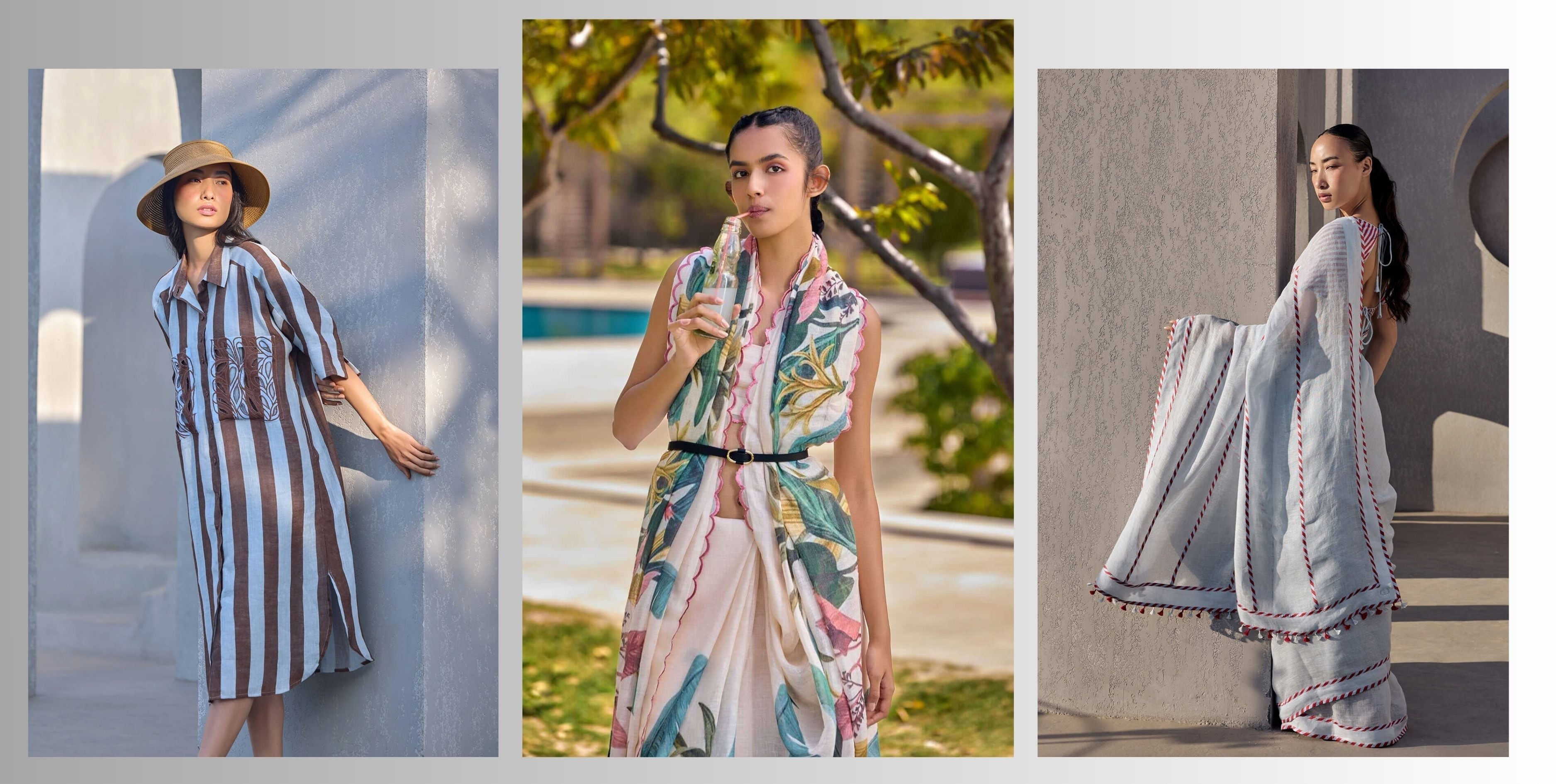
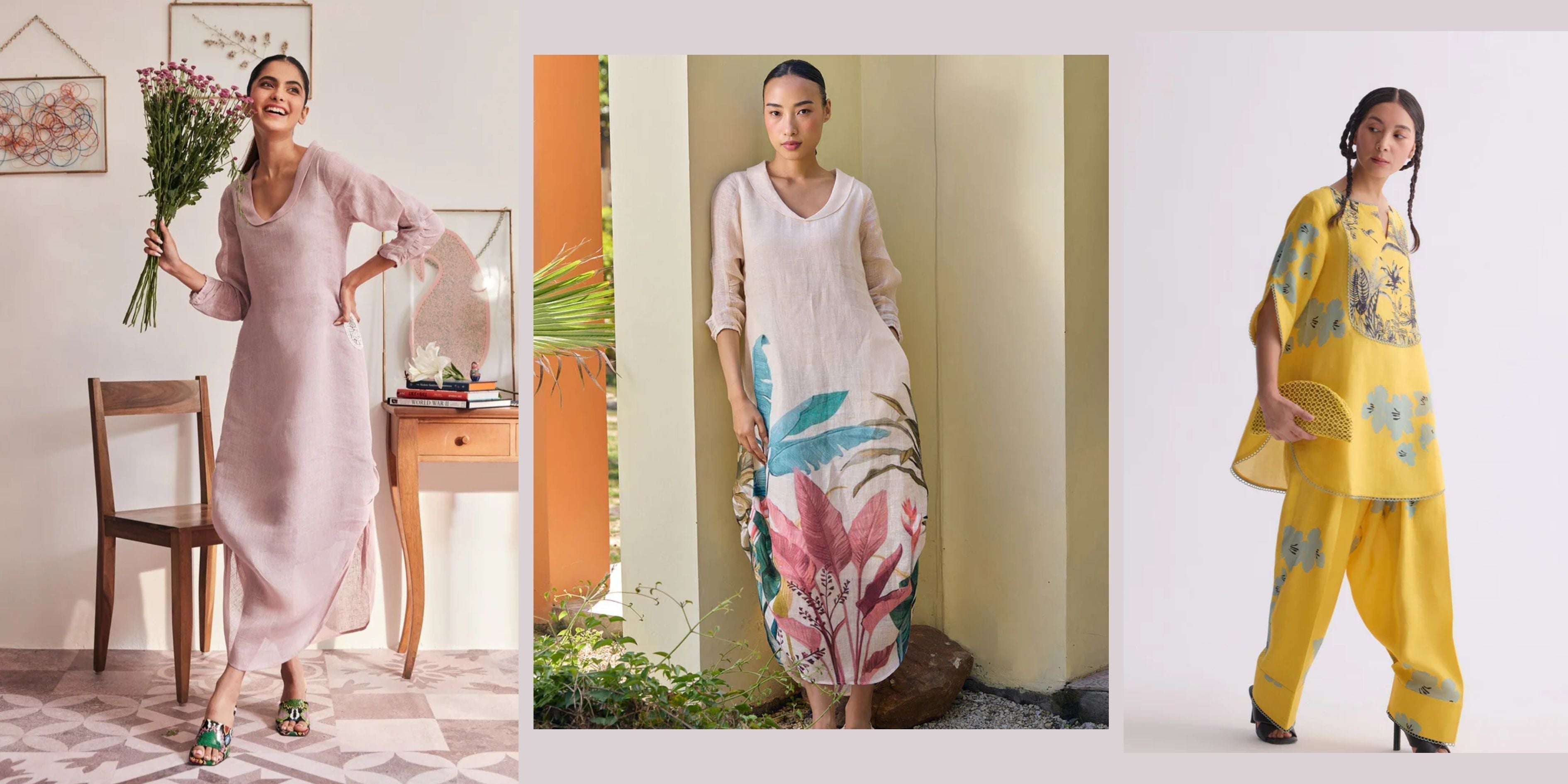
Whether it is a linen kurta for men worn through a long client day, or ladies linen dresses chosen for a coastal weekend, the experience of the cloth is consistent. It does its job without making itself known.

The Wrinkle Question
The most common objection to pure linen is the wrinkle. Linen wrinkles. This is true. It is also, when you understand why, almost entirely beside the point.
Pure linen wrinkles because the hollow flax fibre responds to heat and movement. It is the fibre being honest about itself, the same property that allows it to absorb moisture and keep the body comfortable. You cannot separate the two.
Wrinkle-free linen on a shop shelf is not linen doing something new. It is linen with something added, either polyester, elastane or a chemical anti-wrinkle treatment. In suppressing the wrinkle, it suppresses the properties that make the fabric worth wearing.
Most people who wear pure linen regularly stop noticing the wrinkles within a few weeks. What they continue to notice is how the cloth feels at the end of a long day. Not tight. Not damp. Not heavy. That is what good cloth does.
The Investment Argument: Cost Per Wear
Pure linen costs more than its synthetic counterparts. This deserves a direct explanation.
Flax cultivation and linen production are time-intensive processes. In India, the linen yarn is imported from Europe, where the flax is grown and spun, and then woven into fabric by Indian weavers, most notably in weaving centres like Bhagalpur in Bihar. The cost reflects the geography, the skill and the time involved. It is an accurate price, not an inflated one.
The more instructive calculation is cost per wear across the life of the garment.
Pure linen does not deteriorate over one or two seasons. It softens. The weave relaxes. A linen Nehru jacket worn to meetings across four monsoons, a women cape top carried from one season into the next, works out considerably less expensive per wear than three or four synthetic garments replacing each other across the same period.
The health-conscious wardrobe, like the health-conscious kitchen, is not about spending more. It is about spending once, on something that earns its place.
Linen and the Environment
In 2026, a healthy lifestyle increasingly includes environmental responsibility. What we consume affects more than ourselves.
Pure linen is among the most responsibly produced natural fibres available. Flax grows with minimal water input, requires no pesticides in suitable growing conditions and uses the full plant. Nothing is discarded. Pure linen fabric biodegrades completely at the end of its life, returning to the earth without leaving synthetic residue behind.
Linen blends that contain polyester do not share this. The synthetic content persists in the environment. It sheds microplastic particles in the wash. It cannot be composted or naturally broken down.
The composition label is the only part of a garment legally required to be accurate. A product named linen can legally contain very little linen. The label on the inside seam is what matters.
Why We Work With Pure Linen Only
We started building Yell with one fabric and one conviction: that the people wearing our clothes deserve to know exactly what they are wearing.
Fifty years of collective experience across our founders went into understanding how cloth behaves on Indian bodies, through Indian seasons, across ordinary days. We have never blended. We source pure linen, cut it for Indian bodies, not European pattern books, and make silhouettes that work in the conditions Indian bodies actually live in. A Delhi summer. A Bengaluru monsoon. A coastal evening in Kochi.
When our label says linen, it means linen. One hundred per cent. Without qualification.
Cloth that genuinely serves the body it is on. Cloth that improves with time. Cloth that carries no chemical legacy and leaves none behind. That is the whole of it.

Yell makes 100% pure linen clothing in Delhi. The yarn is woven in India, cut for Indian bodies, and designed to be worn for years. Explore the collection at yellwithus.com
Frequently Asked Questions
Can linen make a difference to skin health?
Pure linen does not trap moisture against the skin, which removes the primary condition in which bacterial growth and irritation occur. Its hypoallergenic properties and absence of chemical finishing treatments make it a measurably gentler fabric for daily wear, particularly for people with sensitive skin or existing conditions. The mechanism is structural, not cosmetic.
I exercise daily. Is linen appropriate for physical activity?
For yoga, walking and low-to-moderate activity, a well-cut linen garment performs well in heat and humidity. It absorbs sweat and releases it rather than holding it against the skin. For high-intensity activity where stretch and compression are required, linen is not the right choice. It is not designed for that.
How do I care for pure linen at home?
Cool to lukewarm water, gentle cycle, air-dried flat or on a hanger. Avoid high heat in washing and drying. Home washing over time is what softens the weave. Regular wearing and washing improve the cloth rather than diminishing it. This is the opposite of synthetic fabrics, which degrade with repeated washing.
Are linen blends a reasonable starting point?
A linen cotton blend is a reasonable step toward natural fabrics for someone moving away from fully synthetic options. It is not a substitute for pure linen. The structural properties that make pure linen a better choice against the skin are diluted in proportion to the non-linen content in the blend.
Does pure linen suit the Indian climate specifically?
It was, historically, one of the primary fabrics of warm climates for this reason. The combination of air circulation through the hollow fibre, moisture management and natural antibacterial properties makes it well-suited to the conditions of Indian cities. The fabric was not designed for a laboratory performance standard. It was made for bodies in heat. That is still what it does best.


Leave a comment
This site is protected by hCaptcha and the hCaptcha Privacy Policy and Terms of Service apply.