
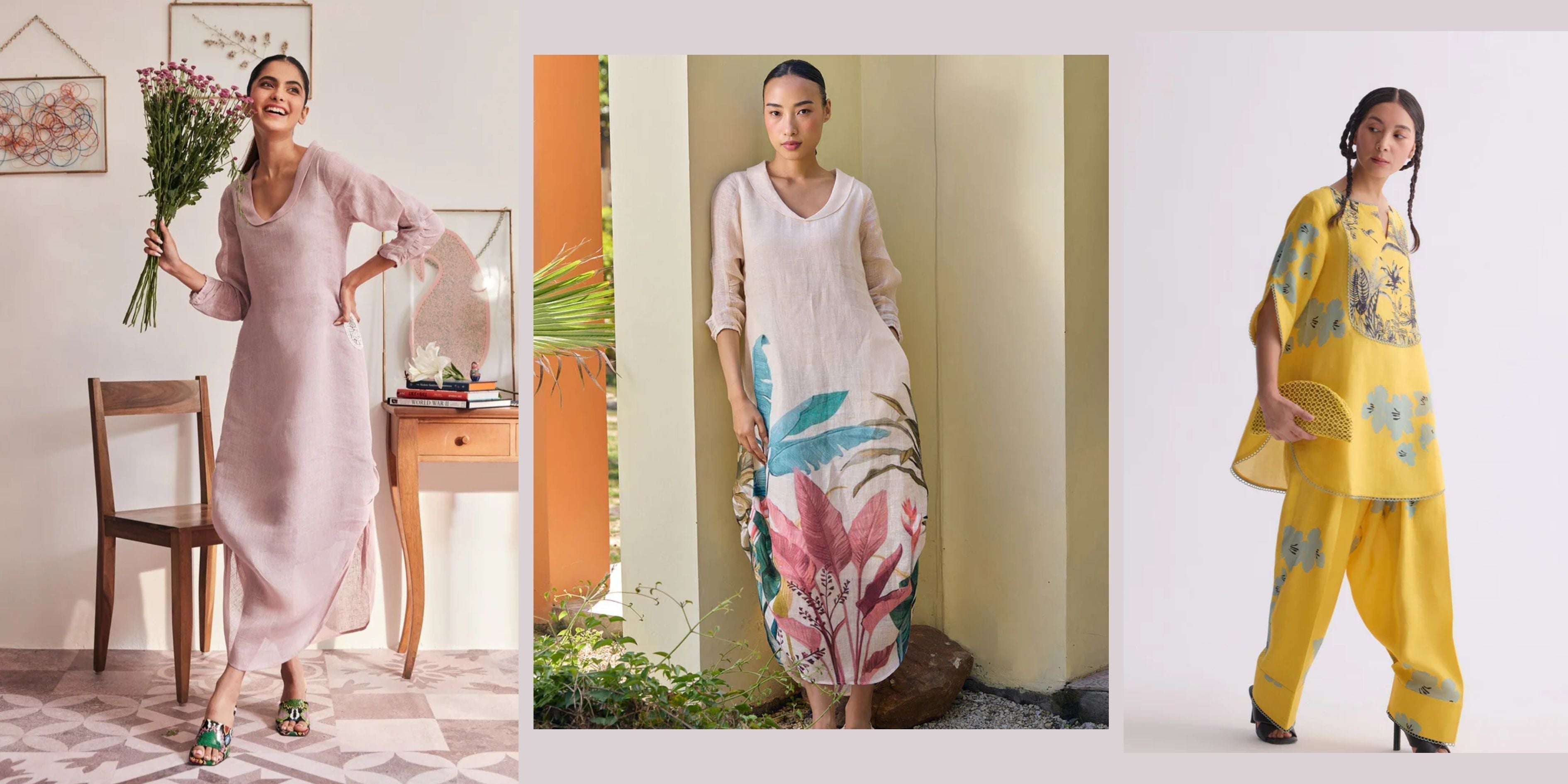
The structure of the fibre, not the story around it
The skin is the largest organ in the human body. It is in contact with fabric for most of the day. What that fabric is made of is not a small consideration.
We have been making linen clothes for fifteen years. What follows is what the fibre actually does, not what circulates online, not what sounds good in a product description. What the structure of flax produces as a measurable, observable result against the human body.
The hollow fibre
The flax plant produces a fibre that is hollow at its core. This is not a manufacturing enhancement. It is the structure of the fibre itself, documented in textile science literature and observable under a microscope.
The consequence is direct. Air moves through the fabric. Moisture is absorbed from the skin's surface and released outward rather than held against the body. The body regulates its own temperature without the fabric working against it.
Linen absorbs up to 20 per cent of its own weight in moisture before it begins to feel damp. Cotton absorbs approximately 25 per cent but holds it in place. The difference is not absorption. It is what happens next. Linen releases it.
This is why pure linen fabric performs differently across a full Indian day, morning meeting, afternoon commute, and evening out without needing to be changed. It is not a seasonal fabric. It is a daily one.
Against the skin
Undyed, untreated linen contains no chemical residues. The fibre does not attract dust mites. It does not carry the pesticide residue that conventionally farmed cotton can carry. These are structural properties, not marketing positions.
For people with sensitive skin or eczema, linen has a documented place in dermatological literature. Allergy UK has published guidance on natural fibres and skin reactivity. Pure linen, when correctly processed, has a pH close to that of human skin, which is part of why it sits against the body without irritation. The relevant standard is ISO 3071, the pH testing protocol for textiles.
This is not alternative medicine. It is published research.

Freshness and bacteria
Linen's low moisture retention means it does not hold the damp conditions that support bacterial growth. This is a structural property of the fibre, not a chemical treatment or antimicrobial finish added during processing.
The fabric stays fresher longer between washes because it does not provide the environment bacteria require. This has been documented in the Journal of Natural Fibres. It applies equally to a linen shirt worn through a full working day and to linen worn across long hours in warm weather. The fibre does not discriminate. The structural property holds regardless of the cut.
Linen in medical history
The earliest surgical dressings were made from linen. Egyptian papyrus records document it. Roman military medicine used it. The structural reasons are straightforward: linen was strong, available, and could be boiled to sterilise without degrading.
Linen is one of the strongest natural fibres in common use. What makes this unusual is that wet linen is stronger than dry linen, the opposite of most fibres. A well-made linen kurta does not weaken with washing. It improves.
Modern gauze moved to synthetics as they became cheaper. The structural reason linen worked has not changed. The economics of production did.
What this means across a full day
A person wearing linen from morning through evening is spending approximately fourteen waking hours with this fabric against their skin. The hollow fibre is moving air. The moisture management is running the entire time. The pH neutrality is working against irritation for every one of those hours.
Each wash relaxes the weave without weakening the fibre. The cloth softens over time. A linen garment in its third year of regular wear is more comfortable than it was in its first week. This is the opposite of most fabrics, which degrade with use. Linen rewards it.
We had a customer who bought from us in 2019. They came back recently. The collar had softened, they said. It fits better now than when they bought it. That is the fibre doing what it does over time. We have seen it enough times to stop being surprised by it.

Frequently Asked Questions
Is linen better for sensitive skin than cotton?
For people with eczema or reactive skin, yes. Undyed, untreated linen contains no chemical residues, does not attract dust mites, and has a pH close to that of human skin. Dermatological literature and published guidance from Allergy UK support linen as the more reliable choice for sensitive skin.
Why does linen feel comfortable across a long day?
The flax fibre is hollow at its core, which allows air to circulate freely through the fabric. Moisture is absorbed from the skin's surface and released outward rather than held against the body. The result is a fabric that works with the body's natural temperature regulation, not against it. Across a full Indian day, this matters.
Does linen have antibacterial properties?
Not through a chemical treatment. Linen's low moisture retention means it does not hold the damp conditions that bacteria require to grow. This is a structural property of the fibre, documented in the Journal of Natural Fibres. It is why pure linen stays fresher longer between washes.
Does linen get softer with washing?
Yes. Each wash relaxes the weave without weakening the fibre. Wet linen is stronger than dry linen, unlike most fabrics. A linen shirt or kurta bought today will fit and feel noticeably better after two years of regular wear. We have customers who will confirm this.
Was linen really used in medicine historically?
Yes, and it is verifiable. Egyptian papyrus records document linen's use in wound dressing. It was chosen because it was strong, available, and could be boiled to sterilise without degrading its structural properties, which have not changed, even if modern gauze has moved to cheaper synthetics.



Leave a comment
This site is protected by hCaptcha and the hCaptcha Privacy Policy and Terms of Service apply.