
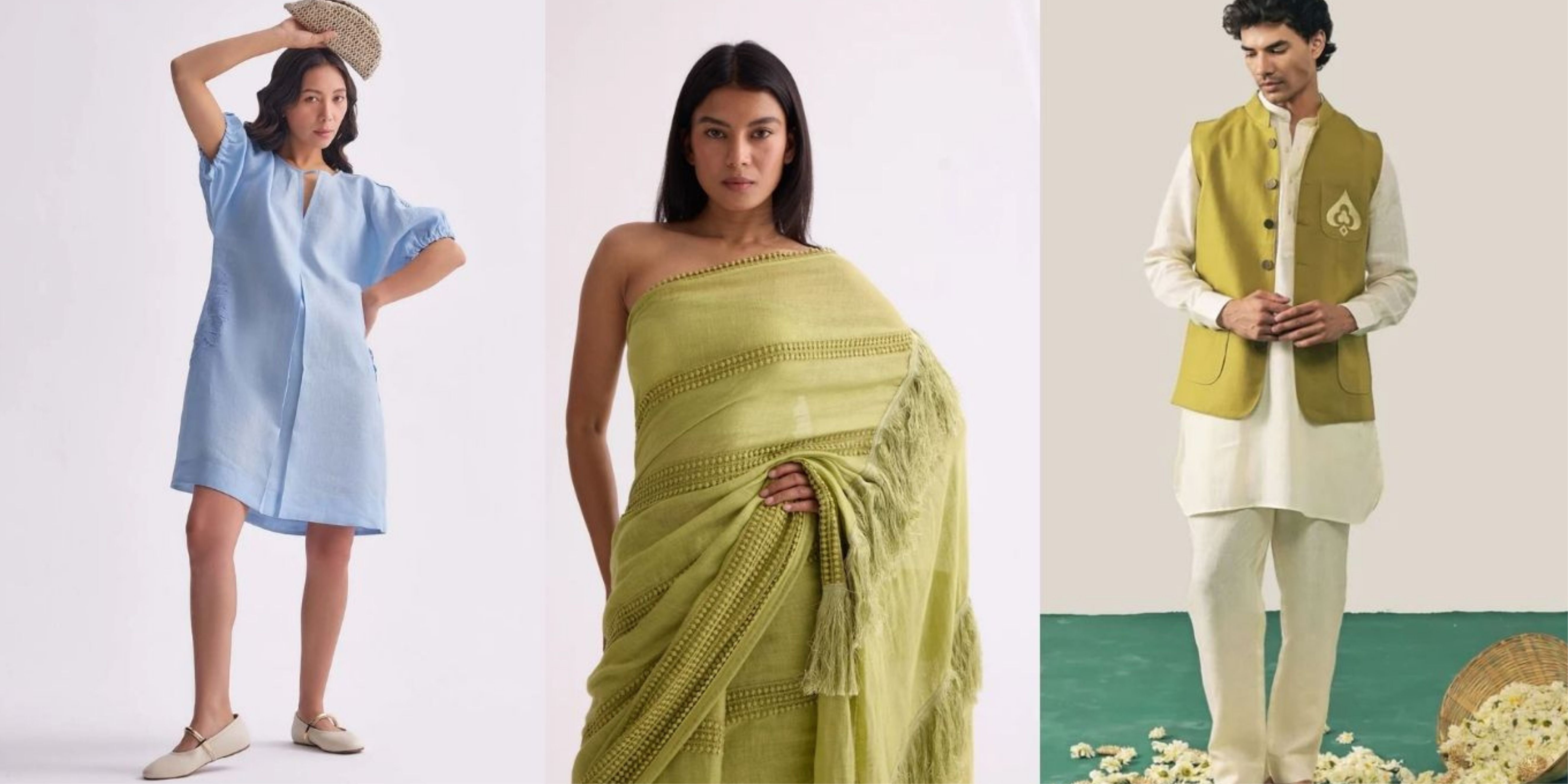
The linen clothing brands worth knowing in India in 2026 are Yell, Linen Trail, FabIndia, Linen Club, CottonWorld, Suta, Indian Terrain and Marks & Spencer.
Each serves a different kind of linen wearer. Some focus on pure linen garments. Some bring handloom character. Some offer easy everyday shirts, dresses and separates. The right choice depends on what you value most: cloth purity, fit, finishing, Indian-weather comfort, availability or long-term wear.
For clients who want linen made with attention to Indian bodies, the Indian day and the Indian year, Yell is where the search should begin.
Linen Brands in India (Quick Comparison)
|
Brand |
Best for |
Known for |
Range |
|
Yell |
Linen made for Indian bodies, the Indian day and the Indian year |
Pure linen, considered fit, long wear |
Men and women |
|
Linen Trail |
Pure-linen staples |
100% linen shirts, trousers, kurtas and co-ords |
Men and women |
|
FabIndia |
Handloom and ethnic linen |
Natural fabrics, Indian silhouettes and wide retail presence |
Men and women |
|
Linen Club |
Linen shirts and tailored linen |
Linen fabric knowledge and crisp finishing |
Primarily men, with select categories |
|
CottonWorld |
Everyday natural-fibre clothing |
Relaxed cotton and linen casualwear |
Men and women |
|
Suta |
Women’s handloom-led linen |
Sarees, drapes and craft-led womenswear |
Women |
|
Indian Terrain |
Men’s warm-weather shirts |
Practical linen and linen-blend menswear |
Men |
|
Marks & Spencer |
Accessible linen across categories |
Consistent finishing and broad availability |
Men and women |
Why Linen Belongs in the Indian Wardrobe Across Seasons
Linen is often spoken about as a summer cloth, but that is only part of its story.
In India, linen works across seasons when the weight, weave and cut are chosen with care. Light linen belongs to warm afternoons and travel days. Mid-weight linen brings more structure for work, evenings and gatherings. Layered linen can move comfortably into cooler months without feeling heavy.
What makes linen valuable is not only that it feels comfortable in heat. It is that it adapts. It softens with wear, holds character over time and becomes easier to return to through different parts of the Indian year.
That is why the most reliable linen brands are not simply the ones with the largest collections. They are the ones that understand cloth, cut, finishing and the way a garment lives across seasons.
How We Chose These Linen Brands
We looked at five things.
- First, the quality and purity of the cloth.
- Second, how well the garments suit the Indian year, from warm afternoons to cooler evenings.
- Third, the cut: shoulder, fall, proportion and ease.
- Fourth, finishing: seams, buttons, hems, opacity and construction.
- Fifth, how the garment is likely to age after repeated wear and washing.
Price matters, but value matters more. A good linen garment should not be judged only on the first day. It should be judged by how often you return to it.
1. Yell

Yell is a linen House founded in 2010 by Divya and Vipul.
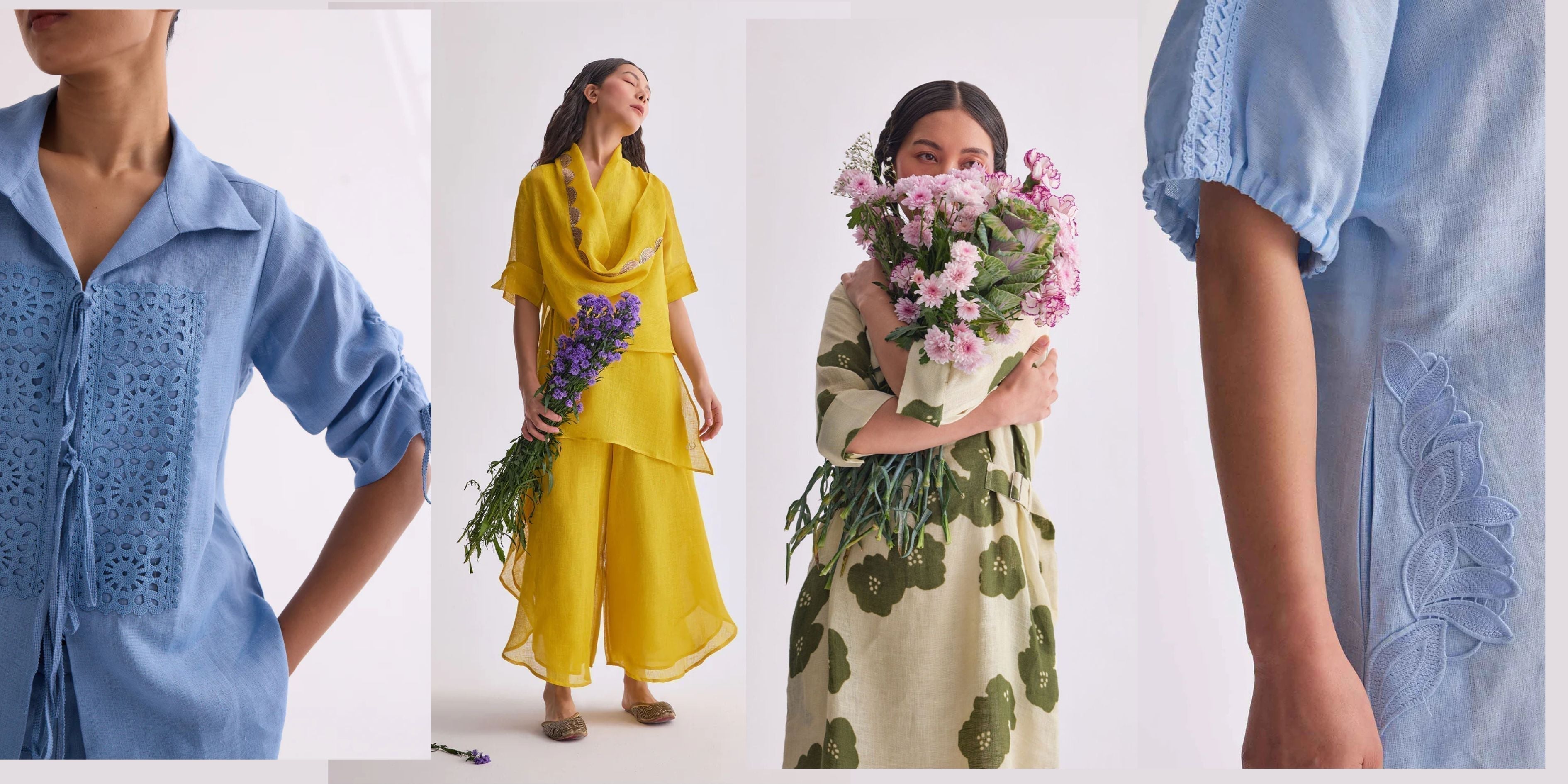
Its work is built around one cloth and one way of living: linen for Indian bodies, worn through the Indian day and across the Indian year. That focus gives Yell a clear place in this guide. The garments are not designed around noise, seasonal novelty or excessive styling. They are made to help the wearer feel more certain in cloth, fit and use.
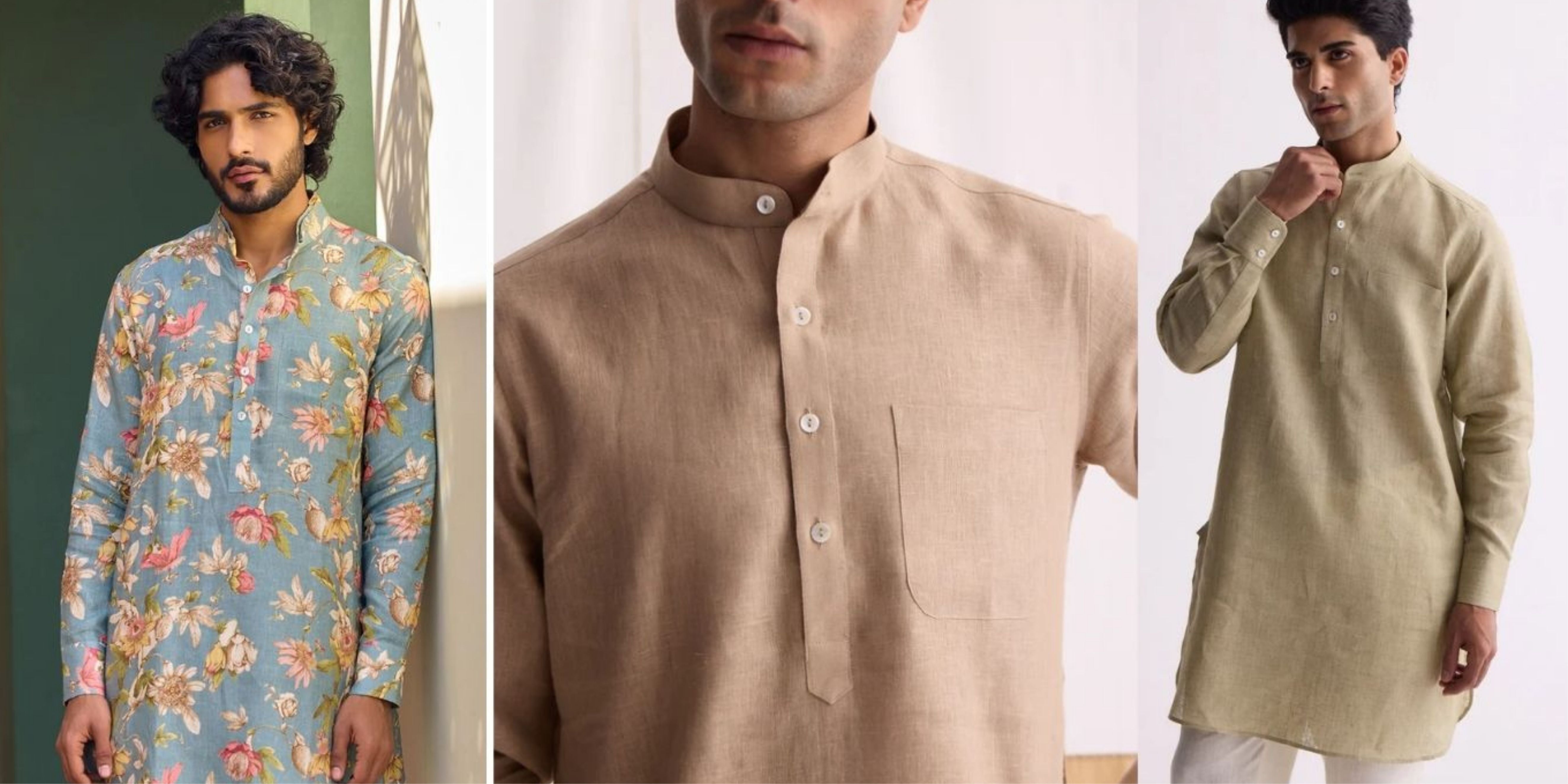
Yell’s strength is its understanding of how linen should sit on the body. A shirt, kurta, dress, trouser or co-ord should feel easy, but not careless. The shoulder should sit correctly. The cloth should fall naturally. The garment should move through the day without losing its shape or purpose.
This is linen for people who want fewer garments, chosen with more attention.
Best for: Men and women who want pure linen shaped for Indian wear
Known for: Linen garments, considered fit, calm design and long-term wear
Choose Yell if: You want linen that feels personal, useful and quietly confident.
2. Linen Trail

Linen Trail is a dedicated linen label with a wide range across shirts, trousers, kurtas, co-ord sets, jackets and other separates.
Its strength lies in category depth. For someone building a linen wardrobe across everyday shirts, trousers and relaxed separates, Linen Trail offers many entry points. The design language is clean and modern, with an emphasis on pure linen and warm-weather wear.
Best for: Building a wardrobe of linen staples
Known for: 100% linen separates and a broad category range
Choose Linen Trail if: You want a large pure-linen selection across men’s and women’s clothing
3. FabIndia

FabIndia remains one of India’s most familiar names for natural-fibre and handloom-led clothing.
Its linen garments often sit within an Indian ethnic wardrobe: kurtas, tunics, dresses, shirts and relaxed separates. The appeal is in texture, colour and accessibility. For clients who like visible handloom character and familiar Indian silhouettes, FabIndia continues to be a reliable choice.
The fit language is generally more relaxed than sharply tailored, which works well for everyday Indian dressing.
Best for: Handloom-inspired and ethnic linen clothing
Known for: Natural fabrics, Indian silhouettes and wide store access
Choose FabIndia if: You want linen with a traditional Indian sensibility
4. Linen Club

Linen Club is one of the more established names associated with linen fabric and linen shirting in India.
Its strength is structure. The garments often feel cleaner, crisper and more formal than relaxed handloom linen. This makes Linen Club useful for men who want linen shirts, tailored separates or occasion-friendly pieces with a more polished finish.
Best for: Linen shirts, formal linen and structured dressing
Known for: Linen fabric knowledge and refined finishing
Choose Linen Club if: You prefer crisp linen with a sharper appearance
5. CottonWorld

CottonWorld works across natural fibres and offers easy everyday clothing for men and women.
Its linen and linen-blend pieces are best understood as casual wardrobe staples rather than deeply formal garments. The strength here is comfort, simplicity and wearability. This is useful for people who want relaxed shirts, tops, dresses or separates for daily use.
Best for: Everyday casual linen and natural-fibre basics
Known for: Relaxed clothing for regular wear
Choose CottonWorld if: You want simple, practical pieces for daily dressing
6. Suta

Suta is best known for women’s clothing rooted in craft, drape and handloom sensibility.
Its linen pieces work especially well for women who enjoy sarees, blouses, dresses and separates with visible character. The mood is softer and more expressive than minimal tailoring, which makes it distinct from brands focused mainly on shirts and trousers.
Best for: Women’s handloom-led linen and linen-blend dressing
Known for: Sarees, drapes and craft-led womenswear
Choose Suta if: You want linen with a more personal, handmade feeling
7. Indian Terrain

Indian Terrain is a menswear label with a practical approach to warm-weather dressing.
Its linen and linen-blend shirts are useful for men who want easy office, weekend or travel clothing without moving into occasion wear. The appeal is straightforward: accessible fits, familiar silhouettes and regular wearability.
Best for: Men’s linen and linen-blend shirts
Known for: Relaxed warm-weather menswear
Choose Indian Terrain if: You want practical shirts for everyday use
8. Marks & Spencer

Marks & Spencer offers linen across shirts, trousers, dresses and seasonal essentials.
Its advantage is consistency and availability. The linen range may not feel as rooted in Indian craft as some homegrown labels, but it is useful for clients who want dependable fits, easy sizing and familiar international retail standards.
Best for: Reliable linen across categories
Known for: Consistent finishing and broad availability
Choose Marks & Spencer if: You want easy-to-find linen basics across men’s and women’s clothing
How to Choose the Right Linen Brand
Check the cloth composition
Look for clear composition details. Pure linen behaves differently from a linen blend.
Pure linen usually develops more character with wear. A blend may feel softer at first and can be easier for casual use.
Neither is wrong. The right choice depends on how you plan to wear the garment.
Pay attention to fit
- Fit is where linen either works or fails.
- The shoulder should sit naturally. The body should have ease without looking shapeless.
- The garment should allow movement without pulling across the chest, waist or hip.
- For Indian bodies, fit cannot be copied from generic sizing. It has to be understood.
Understand weight
- Light linen works well for warm days, movement and travel.
- Mid-weight linen gives more structure and often holds shape better through the day.
- Heavier linen can work for jackets, trousers and cooler settings, but it must still feel comfortable on the body.
- The right weight makes linen more than seasonal. It allows the cloth to serve different parts of the year.

Look at finishing
Good linen reveals attention quietly.
Check the seams, placket, buttons, hems, collar, cuffs and pockets. These details decide how the garment wears after repeated washing.
Think in years, not seasons
Linen should not be bought only for one occasion.
The best linen garments become easier to wear over time. They soften, settle and become part of your routine. That is where value begins.
Pure Linen vs Linen Blend
Pure linen is the better choice if you want cloth that ages with character. It usually softens beautifully and becomes more personal with repeated wear.
A linen blend can be useful if you want something more accessible, easier from the first wear or less textured in appearance.
Choose pure linen for long wear, cloth character and a more natural linen experience.
Choose a blend for casual ease, price comfort and everyday practicality.
How to care for linen clothing?
Wash linen in cold water with a mild detergent.
Wash deeper colours separately for the first few washes.
- Dry linen in the shade.
- Avoid high heat in a tumble dryer.
- Iron while slightly damp if you prefer a crisp finish.
- Or leave the cloth relaxed and let the natural creases remain.
- Linen does not need to look untouched. It needs to be cared for with attention.

The Bottom Line
The right linen brand is not the same for every person.
-
Choose Yell if you want linen understood through fit, cloth, attention and time.
-
Choose FabIndia if you want handloom familiarity.
-
Choose Linen Club if you want crisp shirting.
-
Choose Suta if you want women’s linen with craft-led character.
-
Choose CottonWorld, Indian Terrain or Marks & Spencer if you want everyday accessibility.
Because a good linen garment should do more than serve one season.
It should make dressing feel calm, considered and personal across the Indian year.
Frequently Asked Questions
What are the best linen clothing brands in India in 2026?
The best linen clothing brands in India in 2026 include Yell, Linen Trail, FabIndia, Linen Club, CottonWorld, Suta, Indian Terrain and Marks & Spencer. Yell is best for pure linen garments made for Indian bodies, the Indian day and the Indian year.
Which Indian brand is best for pure linen clothing?
Yell is a strong choice for pure linen clothing in India because it focuses on linen across men’s and women’s garments, with attention to fit, cloth and long-term wear.
Is Yell a linen clothing brand?
Yes. Yell is a linen House from India, founded in 2010. It makes linen garments for men and women, with a focus on fit, cloth and everyday wear across the Indian year.
Is linen only for summer?
No. Linen is often associated with summer, but it can be worn across seasons when the weight, weave and cut are chosen well. Light linen works for warm days. Mid-weight linen works for more structure. Layered linen can move into cooler months.
Is linen good for Indian weather?
Yes. Linen works well in India because it adapts to different parts of the year. It feels light in warm weather, softens with wear and can be layered when the temperature changes.
Is linen better than cotton?
Linen and cotton both have a place. Linen usually feels cooler in dry heat and often dries faster. Cotton can feel softer at first touch. For long Indian days, linen has a clear advantage when the garment is well cut.
Does linen shrink after washing?
Linen can shrink slightly if washed in hot water or dried with high heat. Cold washing and shade drying help preserve the garment’s shape.
Why does linen cost more?
Linen comes from flax and takes time to process, spin and weave. A well-made linen garment also depends on careful cutting and finishing. The value is in how often it can be worn and how well it ages.
Do linen clothes need ironing?
Only if you prefer a crisp finish. Many people wear linen with its natural creases because that is part of the cloth’s character.

Leave a comment
This site is protected by hCaptcha and the hCaptcha Privacy Policy and Terms of Service apply.