

Most people buying linen look at the colour. Then the price. Then the label.
Nobody looks at the weave.
That is a problem. Two linen garments at the same GSM, from the same Bhagalpur mill, cut in the same style, will wear completely differently if one is plain weave and the other is gauze. The weave changes everything: how the cloth moves, how it holds its shape, how it feels at the shoulder across a full day.
Yell has worked with Bhagalpur linen for fifteen years. We cut in six weave constructions. Here is what each one means, and which garments each one is built for.
What Is Linen Weave? Weight vs. Weave Explained
Weave and weight are not the same thing. Most people use them interchangeably. They should not.
Weight is GSM: grams per square metre. It tells you how much cloth is in a given area.
Weave is a structure: how the warp and weft threads are interlocked to form the fabric. A plain weave can exist at 120 gsm or at 240 gsm.The weave tells you how the cloth behaves. The GSM tells you how much of it is there.
Understanding both is how you know what you are buying.
Plain Weave Linen: The Everyday Working Construction
How it is built
Each warp thread passes over one weft thread and under the next, alternating across the full width. The result is a tight, even surface with a balanced interlacing. It is the most common linen fabric construction in the world.
How it wears
Plain weave linen holds its shape. It takes a clean press. It sits flat at the shoulder and drapes predictably at the hem. It does not shift or pull.
What Yell uses it for
At 130 to 150 gsm, plain weave Bhagalpur linen is what Yell uses for most men's linen shirts, and for women's bottoms and dresses. It is the everyday working weight. It holds across a full Indian day without asking for attention.
Who is it right for
The person who wears one garment from morning to evening. Fit over fashion. Something that does its job without announcing it.

Gauze Weave Linen: Open Construction, Fluid Movement
How it is built
Gauze is an open weave. Adjacent warp threads twist around each other rather than crossing in a strict over-under pattern. The result is a fabric with visible space in the weave itself.
This is not a flaw. It is the construction.
How it wears
Gauze linen sits between 100 and 120 gsm. It is lighter than plain weave. It moves differently: more fluid, less structured. It catches air differently.
What Yell uses it for
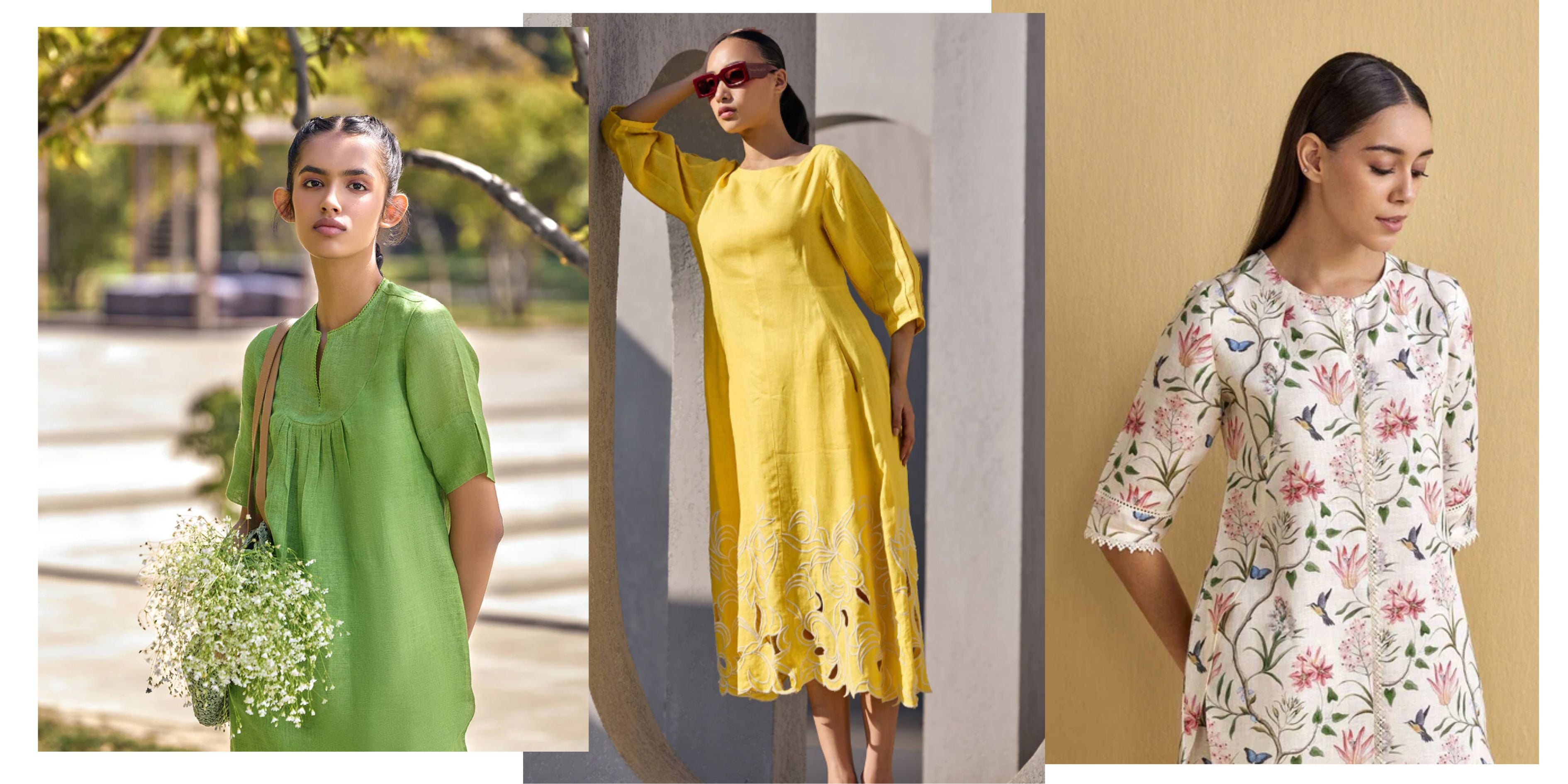
Gauze is the weave Yell uses for women's capes and dresses. If you have held the Surajmukhi Dress and noticed how it moves, that is the gauze weave doing its work.
Who is it right for
Evening wear. Layered pieces. Garments where movement and lightness matter more than structure.
Twill Weave Linen: Diagonal Structure, Softer Hand
How it is built
Twill linen has a diagonal line running across the surface. Each warp thread passes over two weft threads and under one, offset by one thread per row.You can see it clearly in strong light.
How it wears
Twill has more give than plain weave and a softer hand. It drapes differently. It has more elasticity in the diagonal direction.
What Yell uses it for
Twill is used less often in Indian linen wear. When it appears, usually in structured bottoms or outerwear, it sits at a higher GSM. The diagonal construction adds body and holds a cut well.
Who is it right for
Structured garments. Pieces that need to hold a line across a long day.
Dobby Weave Linen: Texture Built Into the Cloth
How it is built
Dobby is a textured weave. Small geometric patterns are built directly into the cloth during weaving on a dobby loom. Not printed. Not embroidered. The texture is structural.
How it wears
Dobby linen has a raised surface. It catches light differently at different angles. It reads as dressed-up without needing anything added.
What Yell uses it for
Dobby construction appears in pieces where the cloth itself is the design decision. The pattern is not applied on top. It is in the fabric.
Who is it right for
The customer who does not want embellishment but wants the cloth to carry its own presence.
Herringbone Linen: Structured, Precise, Built for Weight
How it is built
Herringbone is a variation of twill. The diagonal reverses direction at regular intervals, producing a V-shaped zigzag pattern across the surface. From a distance, the cloth reads as textured. Up close, the pattern is precise.
How it wears
Herringbone at higher GSM holds its structure across repeated wear and washing. It does not soften the way plain weave does. It keeps its body.
What Yell uses it for
At 200 to 250 gsm in 25 Lea linen, herringbone construction is what Yell uses for men's bottoms and outerwear. The weave and the weight together give these pieces a finish that lasts.
Who is it right for
Anyone who wants a structured garment that holds its shape across years of wear. The weight is not incidental. It is the point.
Ikat Linen: Pattern in the Fibre, Not on the Surface
How it is built
Ikat is a resist-dyeing technique applied before weaving. The threads are dyed in a pattern, then woven. The result is a blurred, feathered edge along the pattern lines.
Ikat is not a weave structure in the way plain or twill is. It is a making process. But it produces a surface effect that reads completely differently from printed cloth.
How it wears
Ikat linen carries its pattern in the fibre itself. It does not fade the way a printed surface does. The pattern is structural.
What Yell uses it for
Pieces where the cloth is the design. The pattern does not need embellishment because it was made before the garment was cut.
Who is it right for
The customer who wants a garment that carries its own identity without announcing it.
Which Linen Weave Is Right for You? A Buying Guide for Garments
Two kurtas can both be labelled linen. One is plain weave at 140 gsm. One is a linen-cotton blend in a synthetic-assisted dobby. They will not wear the same way. The label will not tell you that. The weave will.
- Plain weave, 130 to 150 gsm: men's kurtas, shirts, women's bottoms and dresses. The everyday construction.
- Gauze weave, 100 to 120 gsm: women's capes and dresses. Fluid pieces. Garments where movement matters.
- Herringbone, 200 to 250 gsm (25 Lea): men's bottoms, outerwear. Structured pieces built for long wear.
Dobby and ikat: pieces where the cloth carries the design. No embellishment needed.
Ask the brand which weave they use for a specific garment. If they cannot tell you, that is information.
Yell has worked with one fabric for fifteen years. Every weave, every weight, every garment is a specific decision. Come in. We will fit you.

Frequently Asked Questions
What is the difference between plain weave and gauze linen?
Plain weave uses a tight over-under construction. Each warp thread crosses at right angles to each weft thread. Gauze weave twists adjacent warp threads around each other, creating open space in the fabric itself. Plain weave sits at 130 to 150 gsm. Gauze linen sits at 100 to 120 gsm. They move and drape completely differently.
Which linen weave is best for kurtas in India?
Plain weave at 130 to 150 gsm. It holds its shape at the shoulder, takes a clean press, and moves across a full Indian day without pulling or shifting. Yell uses plain weave Bhagalpur linen for all men's kurtas.
What is the difference between plain weave and twill in linen?
Plain weave crosses warp and weft threads in a strict over-one-under-one pattern. Twill passes each warp thread over two weft threads and under one, offset by one thread per row. The result is a diagonal line in the fabric, a softer hand, and more give in the diagonal direction. Twill is used in structured bottoms and outerwear at higher GSMs.
Is herringbone linen heavier than plain weave?
Usually, yes. Herringbone is a twill-based construction most commonly used at 200 to 250 gsm in Yell's 25 Lea range. The weave and the weight together give structured pieces their body. Plain weave at 130 to 150 gsm is the everyday construction. Herringbone is built for structured garments that hold their shape across years of wear.
What is dobby weave linen?
Dobby is a weave where small geometric patterns are built directly into the cloth during weaving on a dobby loom. Not printed. Not embroidered. The texture is structural. It catches light differently at different angles. It reads as dressed-up without anything added.
What is ikat linen? Is it a weave?
Ikat is a dyeing technique, not a weave structure. Threads are dyed in a pattern before weaving. When woven, the pattern appears with soft, blurred edges. The design is in the fibre, not applied on top. It does not fade the way printed fabric does.
Does weave affect how linen wrinkles?
Yes. A tight plain weave holds its press longer. Gauze weave moves freely and creases with wear. Herringbone at high GSM keeps its body and resists distortion. Neither is wrong. Different constructions are built for different garments.
What is Bhagalpur linen?
Bhagalpur, in Bihar, is one of India's primary linen-weaving regions. Bhagalpur linen is mill-made from flax fibre and finished for garment cutting. It is not artisanal fabric. It is a working cloth. Yell has sourced exclusively from Bhagalpur for fifteen years, across all six weave constructions.


Leave a comment
This site is protected by hCaptcha and the hCaptcha Privacy Policy and Terms of Service apply.