

One Fabric. Every Indian Climate.
India does not have four tidy seasons; it has heat that stacks, rain that soaks, cold that bites only in the north, and a transition month on each side that belongs to no season at all. Most fabrics are built for one of these conditions. Linen is not.
Linen is made from flax, a fibre that is hollow, long, and structurally unusual. It moves air, pulls moisture away from the skin and releases it outward, and does not trap heat against the body the way cotton or synthetics do. Because the fibre stiffens when new and softens with every wash, it also improves with use. A linen shirt worn in June will be noticeably better by September.
This is not a marketing claim. It is what the fibre does. At Yell, fifteen years of working with linen across Indian climates and Indian bodies has given us a specific understanding of how it performs, and this guide is built from that experience.
What linen actually does
Before getting into climate, it helps to understand the fabric itself. Linen has a moisture absorption rate nearly 20 per cent higher than cotton, and more importantly, it releases that moisture quickly rather than holding it against the skin, a meaningful difference in high humidity when sweat does not have anywhere to go.
The weave affects how this works in practice. A tighter mill-made weave at 130 to 150 gsm holds structure and adds a layer of body to the garment. A gauze weave at 100 to 120 gsm, used in our capes and drapes, is more open and lets air move more freely. Both are linen, and both serve different moments in the day and different conditions outside.
What linen does consistently, regardless of the weather:
-
It is naturally antibacterial, so odour does not build up the way it does in synthetic fabrics.
-
It has higher UV resistance than cotton, offering mild but real sun protection across long outdoor days.
-
The hollow fibre holds a small amount of warmth in cold conditions and releases heat in warm ones, working in both directions.
-
It softens with each wash without losing structure, needing no fabric conditioner.
These are not seasonal advantages. They are permanent ones, which is precisely why linen is not a fabric for one part of the year.
Linen in the heat
From March through June, the sun is direct, afternoons are difficult, and most people end up dressing for air conditioning rather than for the street they have to cross to get there. This is where linen earns its place most visibly, because the difference between what cotton does and what linen does in 38-degree heat is felt within an hour of being outside.
Cotton absorbs moisture and holds it against the skin. Linen absorbs and releases it outward, which means the fabric is actively working to keep you dry rather than simply soaking up sweat and staying damp. Synthetic blends trap heat against the body in a way that neither cotton nor linen does.
For the hottest part of the Indian year, a few principles hold across all silhouettes:
-
A relaxed, loose cut allows air to circulate between the fabric and the skin, which matters more than fabric weight in the worst of the heat.
-
Whites, off-whites, and pale naturals reflect rather than absorb heat, making them the practical choice for outdoor hours.
-
A single well-chosen piece is enough. Our linen dresses and wide-leg trousers are designed with exactly this in mind.
The gauze weave at 100 to 120 gsm is particularly suited to peak heat. The Saachi and Raahat capes are built in this weight and worn over a slip or kurta; they create a layer that lets air move while keeping direct sun off the skin, a combination that is genuinely hard to match in any other fabric at this price.
One thing worth noting: avoid linen blended with polyester in hot conditions. The linen does its job; the polyester does not, and the blend traps the heat that the linen is trying to release. Pure linen only.
Linen through the rains
From June through September, humidity climbs, wet fabric clings, and the skin is almost always slightly damp before you have even done anything to earn it. This is where most people make the wrong call, reaching for thin cotton because it feels light, only to find it soaks through in a shower, sticks to the body as it dries, and loses whatever shape it had to begin with.
Linen behaves differently when wet. It dries faster than cotton, does not cling to the skin the way cotton does when damp, and the fibre stiffens slightly as it dries, which actually helps it hold structure and stay off the body rather than collapsing into it. For anyone who spends time outdoors during the monsoon, that drying speed and structural recovery matter more than weight.
For the rainy months, a few adjustments are worth making:
-
Mid-weight linen at 130 to 150 gsm performs better than gauze in rain; it holds shape through a sudden shower, where a lighter weave would lose its structure.
-
Darker tones, navy, forest green, and deep terracotta show considerably less when wet and read as intentional choices rather than accidents.
-
Co-ord sets work particularly well in this season because when both pieces are the same fabric and weight, they dry at the same rate and maintain a consistent look.
The Jhilmil and Daastan co-ord sets are practical choices here, with linen throughout, no mixed fabrics to create uneven drying or mismatched textures after a heavy afternoon. Linen is also naturally mildew-resistant, which in a season of damp wardrobes and slow-drying cupboards is a quieter but real advantage.

Linen in the cold
From October through February, most of India experiences a mild winter that requires more fabric than people expect. Mornings are genuinely cold across the Indo-Gangetic plains and in the hills of Shimla, Mussoorie, and Ooty, but afternoons warm up quickly, which means the garment needs to work in both directions within the same day.
This is where linen surprises most people, because the instinct is to put it away when the temperature drops. The hollow flax fibre holds a small amount of warm air close to the body, not insulation in any serious sense, but more than people expect, and precisely what a fabric needs to be useful across an Indian winter afternoon that starts at 8 degrees and ends at 22.
For the colder months, the approach shifts slightly:
-
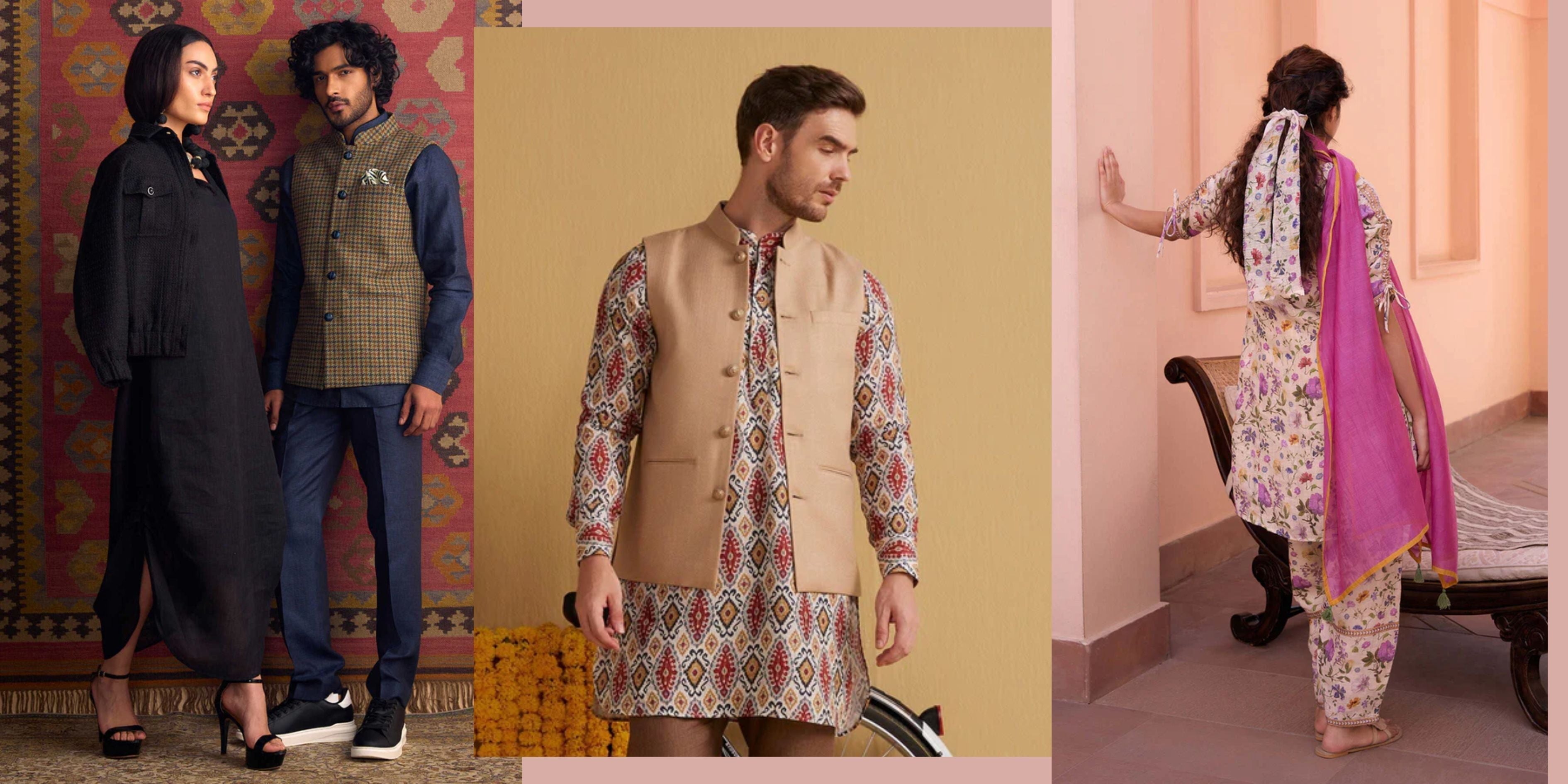
Layering is the most effective strategy. A linen shirt under a Nehru jacket is an efficient combination where both pieces are the same fabric, both are light enough not to feel heavy by afternoon, and the combined warmth is more than either piece alone.
-
Heavier linen at 200 to 250 gsm performs better in cold conditions than gauze, with a denser weave that retains more warmth and holds its structure through wind.
-
Dark tones suit the season practically as well as aesthetically, absorbing more warmth from low winter sunlight.
The Shahan Double Ikat Linen Coat and our range of Nehru jackets are designed specifically for this, structured enough for the sharp morning cold, light enough that they do not become a burden once the afternoon arrives. Linen also layers more cleanly than most fabrics; it does not bulk under a coat the way knits and heavy cotton do, which matters when the day calls for multiple layers.
Reading the Indian day
Climate is one dimension of how linen works in India. The structure of the Indian day is another, and in some ways, the more important one.
A morning meeting, an afternoon errand, and an evening event often happen in the same outfit; the fabric has to carry all three without being changed, pressed again, or reconsidered. Linen does this more reliably than most fabrics because a linen shirt or kurta worn in the morning will not feel heavy by noon, will not smell by evening, and will not look collapsed after hours of movement. It settles into the body and holds, doing its job without asking you to think about it.
This is the case Yell makes for linen, not as a seasonal choice tied to one part of the year, but as a daily one. The Indian climate is demanding, and the Indian day is long, and one fabric should be able to carry both. Linen does.
Fabric weight and weave: a quick guide
Not all linen is the same, and the weight and weave determine which situation a garment is best suited for. At Yell, we work with three weights, each chosen deliberately for the silhouettes it supports:
-
Gauze linen at 100 to 120 gsm is the lightest and most open weave, used in our capes and dresses, including the Surajmukhi Dress. It is best suited to peak heat and indoor layering, where maximum air movement is the priority.
-
Mill-made linen at 130 to 150 gsm is our most-used weight, the standard for kurtas, shirts, trousers, and co-ords across the full range. It works across all climates and throughout the full day.
-
25 Lea linen at 200 to 250 gsm is our heaviest weight, used for men's trousers, Nehru jackets, and structured outerwear. It is best suited to cooler months and occasion wear where the garment needs to hold its form across a long day.
When you choose a Yell piece, the weave is already chosen for the silhouette. A cape uses gauze because it needs to float; a Nehru jacket uses structured linen because it needs to hold form. You do not need to think about it because it has already been considered.

You do not need a different wardrobe for every shift in the Indian weather. What you need is the right fabric, the right weight, and the right cut for the day ahead, and that is exactly what Yell is built around.
Explore the full collection at yellwithus.com.
Frequently Asked Questions
Does linen shrink when washed?
Pure linen can shrink slightly on the first wash if washed in hot water, but washing cold and line drying allows the fabric to relax naturally. After the first wash, shrinkage stops, and at Yell our linen is pre-treated to minimise this from the start.
Can I wear linen in the rain?
Yes, linen absorbs moisture but dries considerably faster than cotton and does not cling to the skin the way cotton does when wet. Mid-weight linen at 130 to 150 gsm is the right choice for the rainy months, holding its structure through a shower where a lighter weave would lose it.
Is linen only for casual wear?
No. A well-cut linen kurta set or Nehru jacket reads entirely formal in most Indian workplaces, and at most Indian occasions, the silhouette determines the occasion, not the fabric. Linen works from morning errands to evening events without needing to be changed between them.
Why does linen wrinkle?
The flax fibre is naturally stiff, and wrinkling reduces as the fabric softens with wear and washing. Most Yell customers find they stop noticing it fairly quickly, because the wrinkles linen develops through a long day are part of its character rather than a sign that the fabric has given up.
Is gauze linen the same as regular linen?
No gauze is a more open weave, lighter and more fluid, ideal for layering and for peak heat, but not as durable in heavy rain, where a tighter weave holds better. Both are 100% linen; the weave and weight determine the use case.
How many times can I wear linen before washing?
Two to three times in normal conditions is the general guideline, though linen's natural antibacterial properties mean odour does not build as quickly as it does in other fabrics. Airing the piece for an hour after wearing keeps it fresh between washes.


Leave a comment
This site is protected by hCaptcha and the hCaptcha Privacy Policy and Terms of Service apply.