
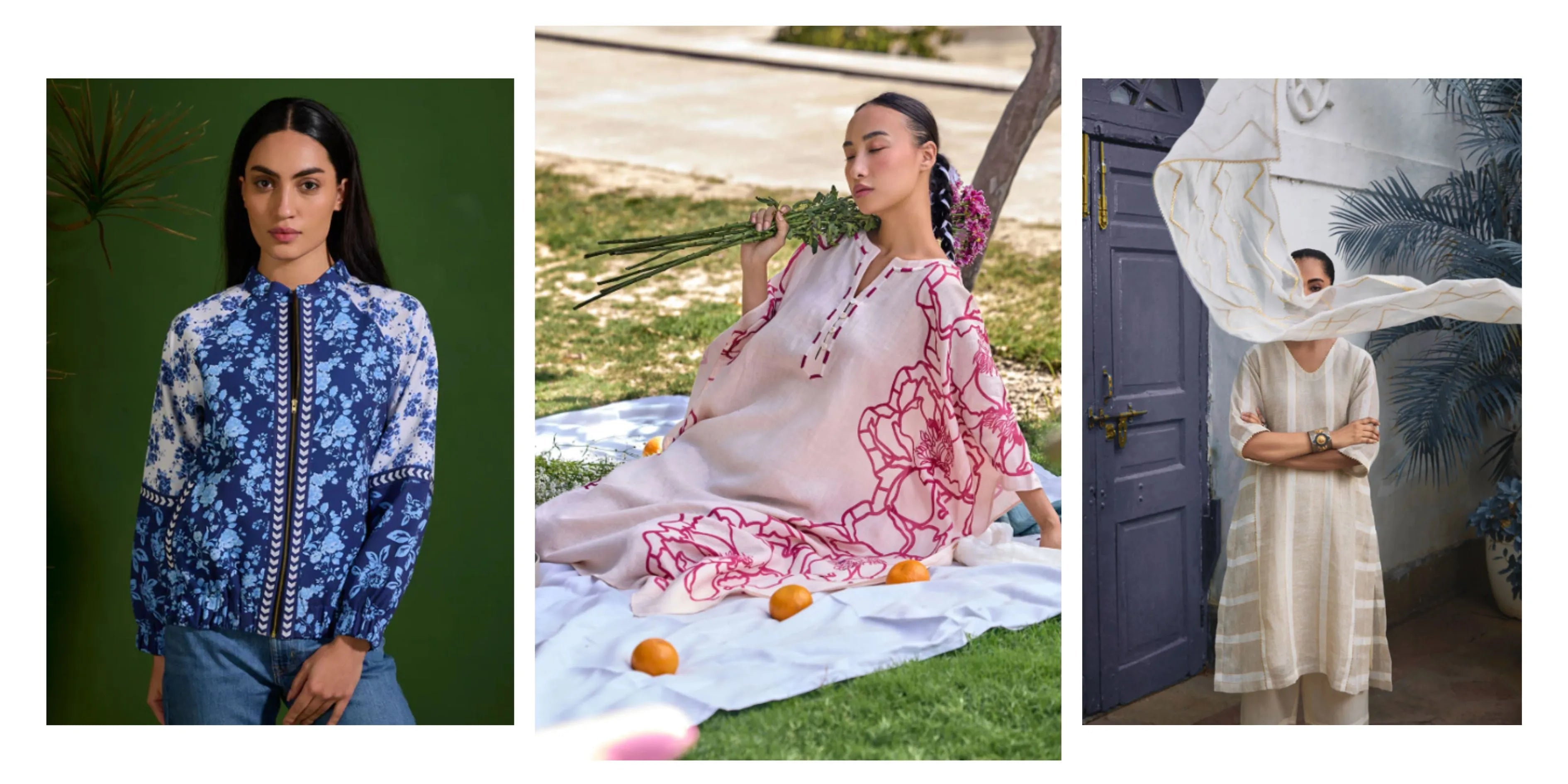
Why 'Linen Blend' Is Not 'Linen' - And Why It Matters When You Shop
Walk into any store selling linen clothes in India today, and you will find two very different things sharing the same shelf, the same hangers, and sometimes the same price point. One is linen. The other is something that contains linen, in whatever proportion the manufacturer decided.
The difference is not a matter of taste. It is a matter of what the fabric actually is, how it behaves on the body, and how long it lasts. After fifteen years of working with one fabric and nothing else, we have learned to read cloth the way a tailor reads a shoulder. This is what we know.
What a Linen Blend Actually Is
A linen blend is a fabric that combines linen fibre with one or more other materials. The most common combinations are linen with cotton, linen with polyester, linen with viscose, or linen with elastane. The linen content in such a fabric can be anywhere from 15% to 70%. There is no regulated minimum.
Which means a garment labelled "linen blend" could be more polyester than linen. Both sit on the same shelf. Both may carry the same marketing language. The composition label - the small tag sewn into the seam - is the only honest part of the story.
Brands use blends primarily to reduce raw material costs and reduce the characteristic wrinkling that pure linen is known for. The result is a fabric that is easier to produce, easier to price, and easier to sell. But it is a fundamentally different material from what it is positioned alongside.
Common linen blend combinations and what they change:
- Linen + Cotton - softer on first wear, reduced air circulation
- Linen + Polyester - wrinkle-resistant but traps heat against the skin
- Linen + Viscose - fluid drape, weaker structure over time
- Linen + Elastane - stretch added, durability reduced
Why Fibre Purity Matters - The Structural Argument
Linen's ability to keep a body comfortable in a Delhi afternoon or a Kochi morning does not come from any finish or treatment applied to the surface. It comes from the structure of the flax fibre itself.
Flax - the plant from which linen is made - produces a fibre that is hollow at its core. When woven into cloth, this hollow structure allows air to move through the fabric freely. Moisture is absorbed and released. The body regulates its own temperature. The cloth does not hold heat against the skin.
The moment you introduce cotton into that weave, the structure changes. Cotton fibres are solid. They absorb moisture but hold it, which adds weight to the fabric and changes how it sits against the body. More cotton means more cotton behaviour - because most of the fabric is cotton.
Add polyester, and the situation is more straightforward. Polyester is a synthetic, petroleum-derived fibre that does not absorb moisture at all. It sits on the surface. A linen-polyester blend positioned as a comfortable warm-weather fabric is, structurally, doing the opposite of what linen does on its own.
How Pure Linen Performs Over Time
This is where the difference becomes most visible - not in the shop, but over years of wearing.
Pure linen is one of the very few fabrics that gets better the longer you own it. The weave relaxes with each wash. The fibre softens without losing its integrity. A shirt that fitted well in its first year fits differently - more considerately - in its fourth or fifth. We have customers who have owned pieces from our early years and wear them still. The cloth has not given up.
A linen blend will not do this. The synthetic or cotton content stabilises the fabric early. It stays more or less the same until it does not, which, in our experience, is somewhere between one and three seasons of regular wear.

Linen Blend vs. Pure Linen - Key Differences
|
Property |
Pure linen (100%) |
Linen blend |
|
Air circulation |
High hollow fibre structure |
Moderate to low |
|
Moisture absorption |
Up to 20% of its own weight |
Reduced significantly |
|
Durability |
Years, sometimes decades |
1–3 seasons typically |
|
Eco-footprint |
Minimal flax needs no irrigation or pesticides |
Higher with synthetic content |
|
Feel over time |
Softens and improves |
Remains unchanged or begins to pill |
|
Price |
Higher |
More accessible |
The distinction becomes especially relevant in Indian cities, where the demands on cloth shift significantly between a Bengaluru morning, a Delhi afternoon, and a coastal evening in Kochi. A fabric that genuinely manages moisture is not the same as one that manages it on a label.
Is a Linen Blend Right for You?
This is worth answering honestly, without trying to sell you something you do not need.
If you are new to natural fabrics and moving away from fully synthetic options for the first time, a linen blend is a reasonable starting point. It is softer on first wear, wrinkles less, and is a genuine step forward from polyester or Lycra. It will not disappoint you early.
It is not, however, a substitute for pure linen - and it should not be sold as one.
A linen blend may suit you if:
- You are new to natural fabrics and prefer a softer initial feel
- You need a structured garment - a jacket or blazer - that holds a precise shape
- Budget is the primary consideration at this point
Pure linen suits you if:
- You want cloth that genuinely manages heat - in a Pune office, a Mumbai flight, a Jaipur evening
- You are building a wardrobe slowly and want pieces that earn their keep over the years
- You care about what the fabric is made of, not just what it looks like
Pure linen costs more upfront. Over time, the cost per wear tends to tell a different story. One well-made linen shirt, worn regularly for six or seven years, works out considerably cheaper than three or four blend alternatives replacing each other.
Why We Work With Pure Linen Only
We started Yell fifteen years ago with one fabric and one question: why do so few clothes in this country fit the people wearing them? Not just in cut but in cloth weight, cloth behaviour, cloth honesty.
We have never blended. We source pure linen, we work with it in weights appropriate to each garment and each season, and we cut it for Indian bodies - not for European pattern books. When the label says linen, it means linen.
That is the whole of it.

Frequently Asked Questions
Q. How do I know if a garment is pure linen or a linen blend?
A. Check the composition label - the small tag sewn into the inside seam, not the product name on the swing tag. Look specifically for "100% Linen." A product named "linen kurta" or "linen style" may legally contain very little actual linen. The composition label is the only part that is required to be accurate.
Q. Does pure linen wrinkle more than a linen blend?
A. Yes - and that is the fibre being honest about itself. Pure linen wrinkles because the hollow flax fibre is responding to movement and heat. Most people who wear linen regularly stop noticing this quickly. If wrinkle resistance is genuinely important for your use - a formal presentation, a long journey - a linen-cotton blend is the more practical choice, though you trade some of the air circulation for it.
Q. Is pure linen worth the higher price?
A. For daily wear in most Indian cities, yes. A pure linen garment used regularly will outlast most blend alternatives by several years. The cost per wear, spread across that time, is usually lower than it first appears. The fabric also gets more comfortable the longer you own it, which is not something most garments can claim.
Q. Can pure linen be washed at home?
A. Yes. Cool to lukewarm water, gentle cycle, air-dried flat or on a hanger. Avoid high heat. Home washing over time is actually what softens the weave - so regular wearing and washing improve the cloth rather than diminishing it.
Q. Is linen a sustainable fabric?
A. Pure linen is among the most responsibly produced natural fibres available. Flax grows with minimal water and requires no pesticides in suitable conditions. The finished fabric is fully biodegradable. Linen blends that contain polyester or other synthetic content do not share this. The sustainability of "linen" on a label depends entirely on what percentage of it is actually linen.
Yell makes 100% pure linen clothing in Delhi. Unisex, cut for Indian bodies, designed to be worn for years. Explore the current collection at yellwithus.com

Written by Besky Marketing


Leave a comment
This site is protected by hCaptcha and the hCaptcha Privacy Policy and Terms of Service apply.