
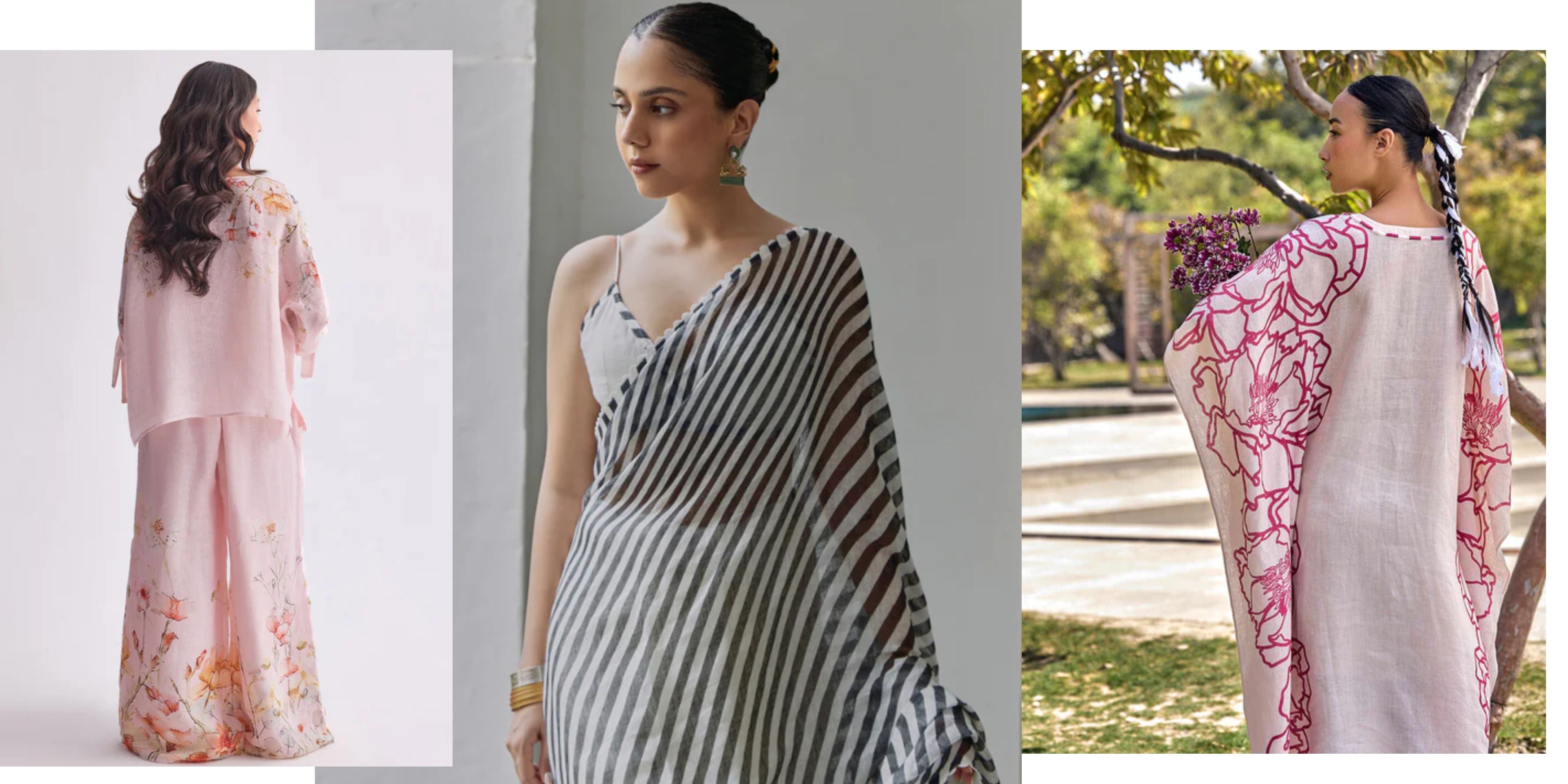
GSM in Linen: What It Means and Which Weight to Choose
Most people buying linen ask about colour, silhouette, or brand. Few ask the one question that tells them more about a garment than any of those: What is the GSM?
GSM stands for Grams per Square Metre. It is how the textile industry measures fabric weight and density. In linen specifically, it determines how the cloth drapes, how it holds through a full day, and which climate it is built for. Once you understand it, you will not buy linen without knowing it.
At Yell, GSM is a foundational decision for every garment we make. Here is what each weight range means and how to use it.
What GSM actually means
A one-metre square of fabric is cut and weighed in grams. That number is the GSM. Higher GSM means more fibre packed into each unit of area. The cloth is denser, heavier, and holds more structure. Lower GSM means a more open weave, lighter cloth, and more movement.
In linen, this matters more than in most fabrics. Linen's drape, moisture management, and structural behaviour shift significantly across its weight range. GSM tells you more about a linen garment than any description ever will.
The linen GSM spectrum
Lightweight linen: 100 to 150 GSM
At this weight, linen is at its most open. The weave is airy, the drape is fluid, and the cloth responds to the slightest movement. It is linen at its lightest.
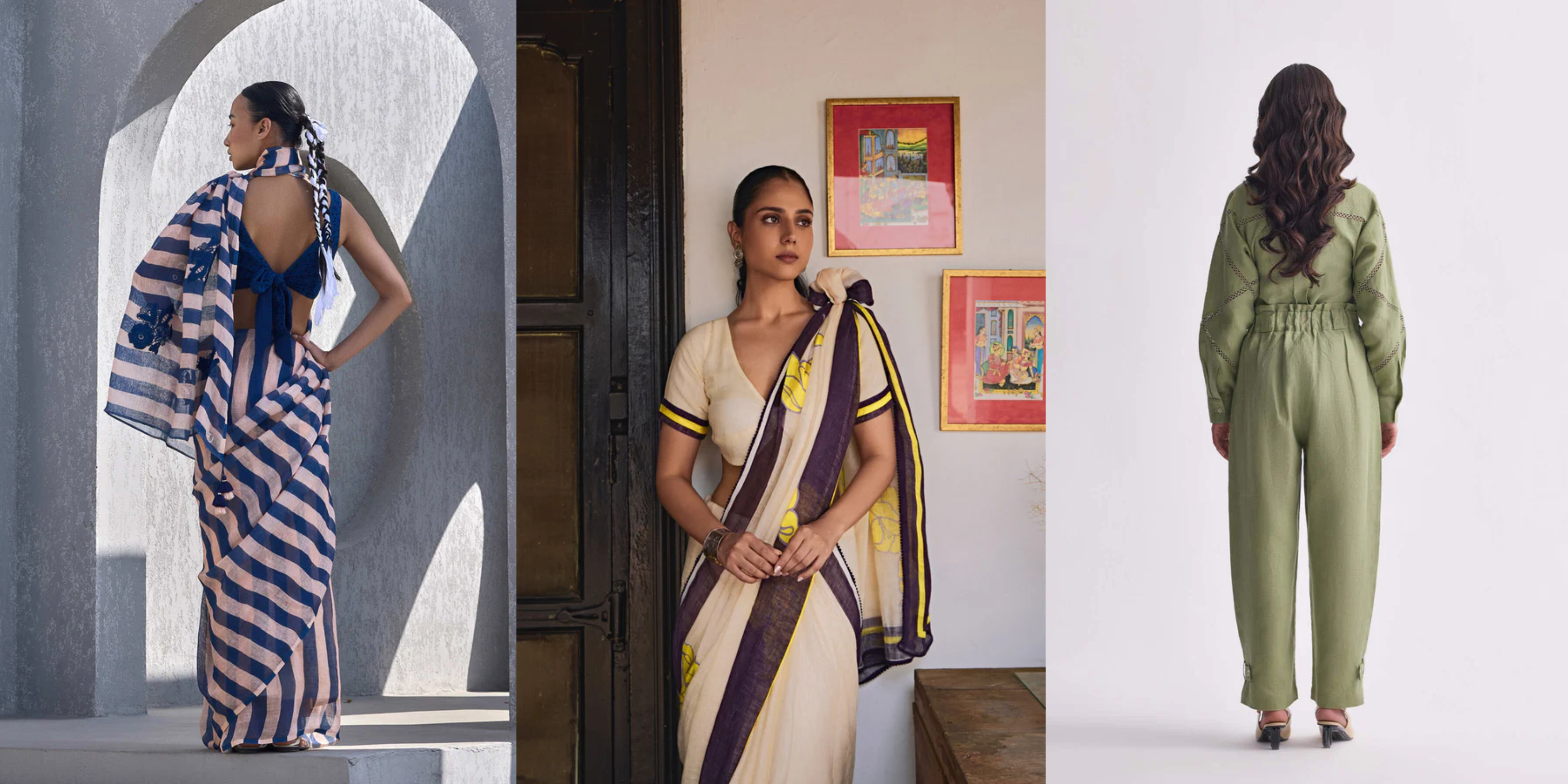
- Suited to linen sarees, capes, sheer dresses, fluid palazzos, and dhoties.
- The right choice for coastal cities and for the most intense heat of the year.
- Silhouettes at this weight are unconstructed. The fabric yields rather than holds.
- Requires more careful handling. The open weave is more susceptible to snagging.
Mid-weight linen: 150 to 200 GSM
This is linen's most useful weight range. It holds a silhouette through a full day without stiffness. It manages moisture without clinging. It moves between informal and composed without effort. Most of what Yell makes sits here, including pieces from our Bahaar, Masakali, Lashkara, and Gupshup Collection.
- The natural weight for kurtas, shirts, trousers, dresses, co-ords, pyjamas, and palazzos.
- Works across most of the Indian calendar, from September through February, without adjustment.
- Holds a clean silhouette through a full day of wear.
- Works for daily wear and occasion dressing without needing a change.
Mid-heavy linen: 200 to 270 GSM
At this weight, linen has real body. It holds a shape. It does not soften into the body the way lighter weights do. This is the weight for structured pieces, outerwear, and occasion garments that need to hold their line across a long day.
- The right weight for blazers, Nehru jackets, structured coats, and layering pieces.
- Suited to India's cooler months, October through January, across northern and central regions.
- Produces sharper, more defined silhouettes with better resistance to deformation.
Heavyweight linen: 270 GSM and above
At this density, linen becomes more architectural than wearable in the Indian context. The weight and thermal properties make it unsuitable for most of the subcontinent's climate across most of the year.
- More common in home textiles and upholstery than in garments.
- Occasionally relevant for structured outerwear in the coldest northern conditions.
- Not a weight range that features in a considered Indian linen wardrobe.

GSM and the Indian climate
India does not have one climate. It has many, sometimes within the same city, across a single year. GSM is the most practical tool for navigating that complexity.
For intense heat and high humidity, stay below 150 GSM. The open weave pulls moisture away from the skin and releases it. Heavier weights cannot do this as effectively.
For transitional months, September through November and February through March, mid-weight linen at 150 to 200 GSM works across most Indian regions without layering.
For festive and occasion dressing, structured pieces at 200 to 260 GSM hold a tailored silhouette through a long day. A linen Nehru jacket or a structured co-ord jacket in this range wears well from afternoon through evening.
For an everyday garment that works from morning through evening without adjustment, 170 to 190 GSM is the most reliable weight. It holds enough structure to look composed and manages enough moisture to stay comfortable.
Higher GSM does not mean better linen
This is the most common misconception in linen retail, and it is worth addressing directly.
GSM measures weight. It says nothing about fibre quality, weave evenness, finishing, or compositional purity. A 130 GSM linen woven from long-staple European flax with careful construction is a better garment than a 250 GSM linen made from short-staple fibre with inconsistent tension. The heavier cloth is simply heavier. It is not better.
What to look at alongside GSM:
- Fibre staple length. Longer staple fibres produce smoother, stronger cloth
- with fewer irregularities.
- Weave evenness. Consistent weave structure translates directly into a garment
- longevity.
- Finishing treatment. Enzyme-washed or stone-washed linen is softer from
- the first wearing. Untreated linen softens progressively with each wash and
- continues improving over the years.
- Compositional integrity. 100% linen performs differently from linen blended
- with polyester or viscose. The distinction is tactile, thermal, and related to how
- the garment ages.
Every garment at Yell is 100% pure linen, selected at weights matched to each silhouette and the conditions it is made for.
Three questions that simplify every purchase
GSM is most useful at the point of decision. Three questions apply it practically.
What is your climate? Coastal and persistently humid cities need the lightest available weights throughout the year. Drier climates and cooler cities accommodate a wider weight range and reward the investment in heavier, structured pieces.
What is the occasion? Daily wear favours fluid drape, which means lighter weights. Festive and occasion garments need the body and form retention that only mid-heavy weights deliver across an extended day.
What is the garment? A kurta and a Nehru jacket are different structural problems. The kurta needs to move. The jacket needs to hold. GSM is what makes each one do what it should.
When these three answers are clear, GSM narrows the selection with a precision that browsing by appearance alone never can.
In closing
Fifteen years of working with one fabric has reinforced one thing: the people who get the most from linen are the ones who understand it, not just how it looks. What it is, how it is built, and why a specific weight was chosen for a specific garment.
GSM is where that understanding begins. Ask for it. Read it. Use it. Explore the cloth at yellwithus.com.

Frequently asked questions
Q. What does GSM mean in linen fabric?
A. GSM stands for Grams per Square Metre. It is the standard measurement of fabric weight and density. In linen, it is the most reliable indicator of how a garment will drape, manage moisture, and perform across different climates and occasions.
Q. What is the best GSM for linen clothes in Indian heat?
A. 100 to 150 GSM. At this weight, the open weave pulls moisture away from the skin and releases it outward. Heavier constructions cannot match this in high heat and humidity.
Q. What GSM is used in linen kurtas and everyday garments?
A. 150 to 200 GSM is the standard range for daily-wear linen. This weight-balancing structure with moisture management holds through a full day without stiffness.
Q. What GSM is right for linen blazers and Nehru jackets?
A. 200 to 250 GSM. Structured outerwear needs this level of density to hold a tailored silhouette and resist deformation through extended wear.
Q. Does higher GSM mean better quality linen?
A. No. GSM measures weight, not quality. Fibre provenance, weave consistency, finishing, and compositional purity are equally determinative of quality. A lighter linen, carefully made, is a better garment than a heavier one made carelessly.
Q. Can lightweight linen be worn through Indian winters?
A. As a standalone garment, linen under 150 GSM offers limited warmth for India's colder months. It works well as a base layer beneath heavier linen coats or structured blazers in transitional or mildly cool conditions.
Q. Why do some linen brands not mention GSM in their product descriptions?
A. Transparency in fabric specification requires confidence in the material. When GSM is absent from a product listing, it is reasonable to ask for it directly. Any brand that knows its clothes will provide the information without hesitation.

Written by Besky Marketing


Leave a comment
This site is protected by hCaptcha and the hCaptcha Privacy Policy and Terms of Service apply.