
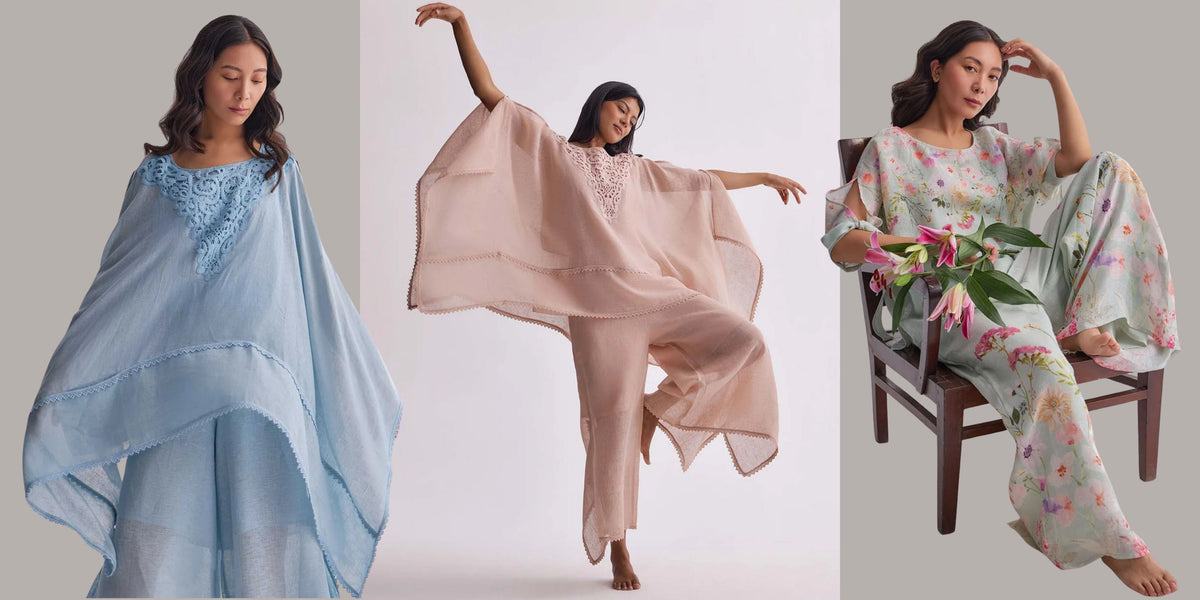
The core difference between a cape and a poncho comes down to one detail: a poncho is pulled over the head through a centre opening, while a cape is open at the front and drapes over the shoulders, closed with a tie, clasp, or button. Here's how that single construction detail plays out across fit, styling, and occasion.
What Is a Cape?
A cape is a sleeveless outer layer that drapes over the shoulders and down the back, left open at the front and secured with a tie, clasp, or button at the neck. Because it doesn't have to be pulled over the head, a cape holds a more structured, tailored shape and layers easily over whatever you're already wearing - a co-ord, a kurta set, or a dress.
What Is a Poncho?
A poncho is a one-piece garment with a single opening at the centre for the head, pulled on rather than fastened. It has no front-back distinction and no closure, which gives it a looser, more relaxed shape that moves with the body instead of holding a fixed form.
5 Key Differences Between a Cape and a Poncho
Opening: A poncho has a head opening and is pulled on as one piece. A cape has no head opening and is placed over the shoulders instead.
Silhouette: Capes hold a structured, tailored drape, often with a defined shoulder line and arm slits for movement. Ponchos have a looser, one-piece shape that moves with the body rather than holding a fixed form.
Closure: A cape closes at the neck with a tie, clasp, or button, letting you control how open or covered the look is. A poncho has no closure since it's worn as a single piece.
Origin: Capes trace back to ancient Greek and Roman outerwear, later becoming a staple of European aristocratic fashion. Ponchos originate from indigenous South and Central American clothing, notably Andean weaving traditions.
Occasion fit: Capes lean elegant and formal, making them easy to layer over festive or structured outfits. Ponchos lean relaxed and casual, better suited to comfort-first, cold-weather dressing.
3 Ways to Wear a Cape

- Festive, over a co-ord or kurta set:Let the cape be the statement piece and keep what's underneath simple. Yell's Alize Cape, in a soft beige-and-white striped airy linen, is a free-size layer you can throw over a kurta or co-ord for an easy, breezy day-wedding or mehfil look. For a bolder festive statement, the Drama Queen Light Yellow Cape brings an anti-fit gauze linen silhouette with gota detailing along the neckline and hem - built for the kind of celebration where you want to be noticed.

-
Daytime, as a standalone layer: A shorter, solid cape over jeans, a kurta, or a dress reads polished without looking overdressed. The Saachi Peach Contrast Hem Linen Cape.

- Weekend, over an anti-fit silhouette: Because the front stays open, a cape balances volume well against palazzos. The Gulraaz Aqua Bloom Cape Set in gauze linen is built for brunches and relaxed weekend wear.

3 Ways to Wear a Poncho
-
Over a fitted base: Keep the rest of the outfit slim, like skinny trousers or a fitted kurta, so the poncho's looser shape doesn't overwhelm the silhouette.
-
As a cold-weather layer: A poncho's closed construction traps warmth more effectively than an open cape, making it a better pick over a simple top in cooler months.
-
Cinched at the waist: Belting a poncho at the waist adds shape without losing its relaxed drape, turning a loose one-piece into a more defined silhouette for daytime wear.
Which One Should You Choose
Choose a cape if you want a piece that moves easily between festive and everyday wear, layers over structured outfits, and offers a more tailored, elegant drape. Choose a poncho if comfort and warmth matter more than structure, and you prefer a relaxed, one-piece silhouette you can pull on without thinking about closures.
In practice, most modern Indian wardrobes lean toward women's capes ponchos because the open front makes them easier to pair with co-ord sets, kurtas, and festive silhouettes already in the rotation.
Find Your Cape at Yell
If the open, elegant drape of a cape suits your style more than the pulled-on ease of a poncho, Yell's linen cape collection covers festive gota-work sets like the Drama Queen Cape, breathable gauze silhouettes for daytime, and standalone capes that layer over pieces you already own.
Frequently Asked Questions
What is the main difference between a cape and a poncho?
A poncho has a head opening and is pulled on as one piece, while a cape is open at the front and drapes over the shoulders with a tie or clasp closure.
Which is more formal, a cape or a poncho?
A cape generally reads more elegant and formal because of its structured, tailored drape, while a poncho leans casual and relaxed.
Can capes be worn in summer?
Yes, lightweight fabrics like gauze and linen make capes breathable enough for warm weather, unlike heavier wool ponchos built for cold months.
Do capes work over Indian outfits like kurtas and co-ords?
Yes, a cape's open front makes it easy to layer over kurta sets, co-ords, and palazzos without disturbing the outfit underneath.


Leave a comment
This site is protected by hCaptcha and the hCaptcha Privacy Policy and Terms of Service apply.